
“Cartons received” is a warehouse update, not shipping approval. The buyer might have accepted the product sample while the printed label still shows “revision requested.” Before those cartons join goods from other suppliers, somebody has to find the label decision and mark the affected cartons for release or hold.
Ask a China buying agent to show that trail. Whether you are buying from two suppliers or ten, four linked records make it easier to supervise samples, quality inspections, and consolidated shipping: a supplier comparison based on the buying brief, a sample and packaging approval summary, a QC report with open exceptions, and a warehouse receiving and release record.
A Brief That Produces Comparable Offers
Send one revision-controlled brief to every shortlisted supplier. Attach a photo and mark each open specification as a question for quotation.
| Brief field | What the buyer needs to specify |
|---|---|
| Product | Material, dimensions, color, function, intended market |
| Order | Quantity, delivery window, destination requirement if relevant |
| Branding | Logo file and placement, labels, inserts |
| Packaging | Unit and outer pack; carton identification |
| Buying route | Stock / modification / private label / new design |
That last row controls the sample request. A bare product sample cannot approve a private-label pack; a printed box does not prove the product inside works.
Ask the agent to make the comparison sheet show the differences, not hide them:
| Field | Record in the sheet |
|---|---|
| Offered product | Specification and pack size used for the quote |
| Commercial terms | MOQ, quoted quantity, sample terms, validity of the offer |
| Production | Maker or supply party, customization scope, stated timing |
| Confidence | Checked evidence; supplier claims; unresolved points |
“Cartons received” is a warehouse update, not shipping approval. The buyer might have accepted the product sample while the printed label still shows “revision requested.” Before those cartons join goods from other suppliers, somebody has to find the label decision and mark the affected cartons for release or hold.
Ask a China buying agent to show that trail. Whether you are buying from two suppliers or ten, four linked records make it easier to supervise samples, quality inspections, and consolidated shipping: a supplier comparison based on the buying brief, a sample and packaging approval summary, a QC report with open exceptions, and a warehouse receiving and release record.
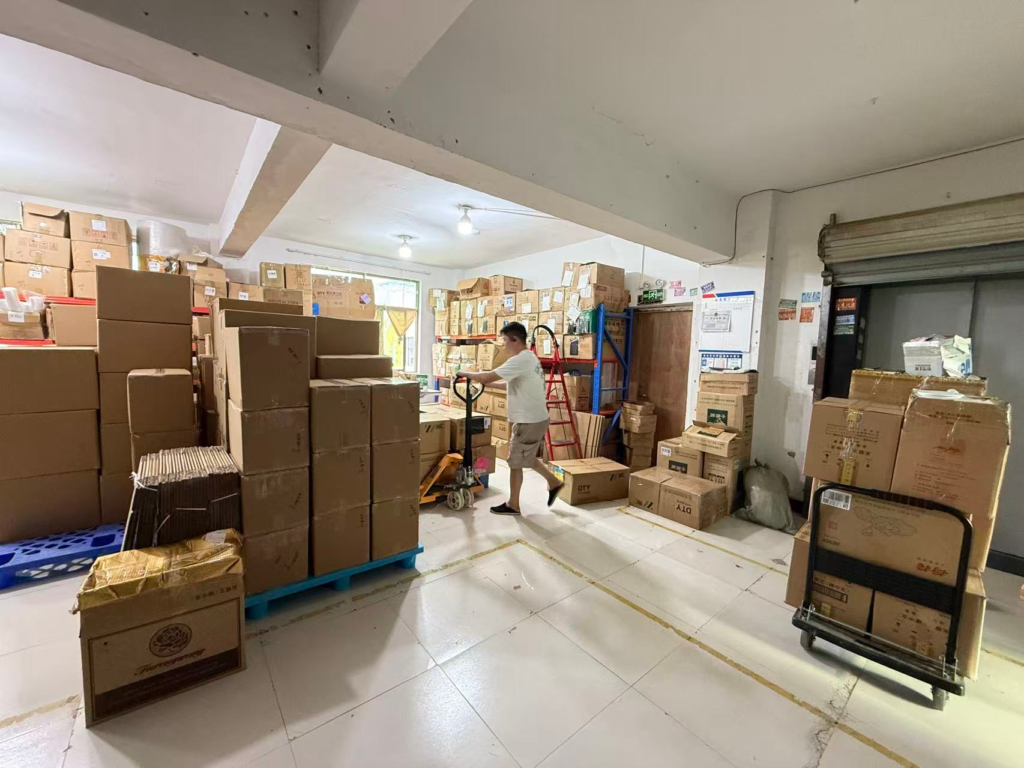
Figure 1. Warehouse handling area with cartons being sorted and moved before shipment.
1. A Brief That Produces Comparable Offers
Send one revision-controlled brief to every shortlisted supplier. Attach a photo and mark each open specification as a question for quotation.
| Brief field | What the buyer needs to specify |
|---|---|
| Product | Material, dimensions, color, function, intended market |
| Order | Quantity, delivery window, destination requirement if relevant |
| Branding | Logo file and placement, labels, inserts |
| Packaging | Unit and outer pack; carton identification |
| Buying route | Stock / modification / private label / new design |
That last row controls the sample request. A bare product sample cannot approve a private-label pack; a printed box does not prove the product inside works.
Ask the agent to make the comparison sheet show the differences, not hide them:
| Field | Record in the sheet |
|---|---|
| Offered product | Specification and pack size used for the quote |
| Commercial terms | MOQ, quoted quantity, sample terms, validity of the offer |
| Production | Maker or supply party, customization scope, stated timing |
| Confidence | Checked evidence; supplier claims; unresolved points |
Apply the same evidence standard to Yiwu market leads. For multi-supplier orders, HolaSourcing’s wholesale sourcing service can help coordinate supplier communication, quotation comparison, and order follow-up.
Check the Quote Before Issuing a PO
Make suppliers answer the same commercial questions: unit price, MOQ, sample cost, customization or tooling, packaging, inspection, warehouse handling, freight, and expiry date. A blank line is a question, not an included service. Note estimated quantities and optional packaging. Before sending the PO, compare the quoted pack and sample with the accepted brief. The buyer can then see whether a low quote simply leaves inspection or packaging outside the scope.
2. When the Sample Changes
If a second sample arrives, keep the first sample record beside it. The measurements, photos, comments, and supplier reply show what changed. A corrected logo does not guarantee that the color or finish stayed the same.
The item in the sample box and the label file are separate approvals. Record the accepted product, artwork, pack and carton mark separately in the PO attachments or approval file. Leave a print file out of production until the buyer approves it.
| Before production starts | Evidence to check |
|---|---|
| Product reference | Approved physical sample or specification, with version |
| Printed material | Versioned artwork and label files |
| Pack-out | Agreed unit and outer packaging |
| Open points | Written conditions and the person who may close them |
The approval summary should name the files sent for production and the decisions still open.
3. A QC Brief That Says What Failure Means
Production updates are most valuable when they explain exceptions. A supplier proposing a material or carton change needs to identify the SKU, show old and proposed versions, and wait for the buyer's decision. “On schedule” is not a complete update if the specification has changed.
An inspection order needs a stage and a reference: incoming goods, work in progress, finished goods, packaging, quantity, or loading; approved sample or drawing; the attributes to check; and the photos or measurements to return. “QC included” tells the buyer too little to schedule a useful check.
Before the inspection, name who can approve rework, another check, acceptance, or a hold. Keep a failed SKU apart from goods that meet the reference. The agent reports the finding; the buyer makes the next call.
HolaSourcing describes general and full inspections on its Quality Control page. Confirm the inspection scope, the handling of failed goods, any reinspection and applicable charges for the actual order.
4. A Receiving and Release Record
For each SKU, record what reached the warehouse and what is ready to ship. Link the arrival to its supplier, PO, and mark. Shortages, damage, wrong labels, and QC holds stay open until someone closes them.
Before the goods are consolidated, the record should answer these questions:
| Question | If the answer is no or unknown |
|---|---|
| Have all required cartons arrived and been identified? | Trace the shortage or decide whether to split. |
| Are inspection exceptions closed? | Hold the affected goods or authorize a recorded remedy. |
| Has repacking or relabeling been approved? | Keep those cartons out of the released count. |
| Do count, dimensions, and weight match? | Correct the booking and packing list. |
For a late SKU, show what a split shipment would include and leave behind. If one supplier’s cartons are cleared but another shipment needs relabeling, the warehouse should not count both as ready to ship.
Example: One Label Hold Across Three Suppliers
Consider a hypothetical order from three suppliers. Supplier A’s cartons have passed the agreed checks. Supplier B’s cartons arrive four short, while Supplier C delivers the right products with an unapproved label. The warehouse record should show A as released, B as short, and C as on hold—not simply mark the entire order “received.”
The agent can send the buyer the shortage count, label photos, and the available choices: correct the labels, wait for the missing cartons, or approve a split shipment. The release record and packing list change only after that decision is documented. This is how consolidation stays traceable without letting one supplier’s problem disappear into a mixed shipment.
HolaSourcing says its warehouse can receive goods from multiple suppliers for combined shipping on the Shipping Solution page. Confirm storage, handling, cut-off and exception terms for this order.
5. Only Then, Book and Document the Shipment
Build the final packing list from released cartons, not from the quantities originally ordered. Reconcile SKU, carton marks, quantities, commercial information, and destination instructions. If goods were reworked or left behind, the documents must reflect that choice. Carton marks should let the receiver identify mixed SKUs.
Compare current sea, air, express, or rail terms for the actual packed cargo and destination. Include urgency and cargo restrictions. The agent waits for the buyer’s route decision before booking. For an overview of how these steps fit together, see HolaSourcing’s China sourcing process.
FAQs
Does an agent set the quality standard?
The buyer defines the requirements before inspection: approved samples, product specifications, packaging, labels, and acceptable defects. A buying agent can coordinate the check, document the findings, and communicate corrective actions. The final decision to accept, rework, or hold the goods remains with the buyer.
Can products from multiple suppliers be shipped together?
Yes, if the cartons have been identified, counted, and cleared for shipment. Combining supplier orders should not erase SKU-level records or unresolved QC exceptions. Storage, repacking, and shipment timing also need to fit the agreed logistics plan.
What must be approved before production?
Approve the product reference or sample version, artwork, labels, packaging, order quantity, delivery assumptions, and inspection brief. Keep later amendments under the affected SKU or purchase order so production is checked against the correct version.
Will consolidated shipping always reduce costs?
Not necessarily. Consolidation can reduce the number of separate shipments, but collection, storage, repacking, relabeling, or a delayed SKU can add costs. Compare the full shipment plan rather than looking only at the freight rate.
What happens if one supplier fails QC before consolidated shipping?
Keep the affected SKU or cartons on hold and document the finding against the approved reference. The buyer can decide whether to request rework, arrange a reinspection, hold the whole shipment, or authorize a partial shipment. Only released goods belong in the final packing list.
Related Guides
- How Does a China Agent Reduce Risk for Multi-Supplier Wholesale Orders?
- How to Source Multiple Products From China: A Complete Guide for Small Importers
- What Should a Sourcing China Agent Do Before Shipping?
- When Does a China Shipping Agent Add Value After Supplier Consolidation?
- How to Verify a Chinese Supplier Before Paying a Deposit?
- How Can China Sourcing Support Repeat Wholesale Orders Across Several Categories?