
Squishy Toys Explained: Why They’re Viral, Their History, Market Trends, and Business Potential

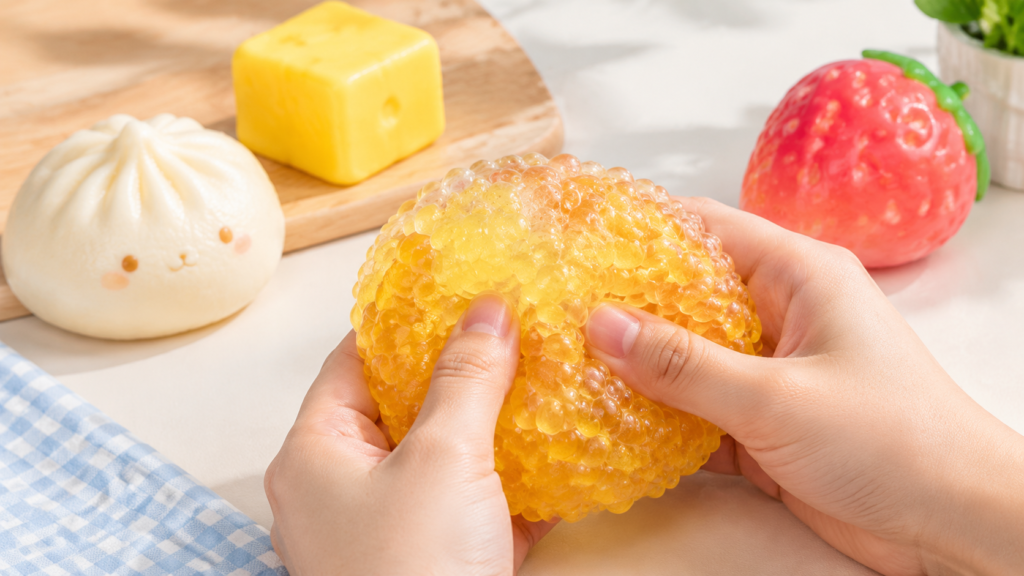
Squeeze the amber-colored bubble gummy balls with both hands

Squishy toys have become one of the most recognizable examples of how a simple product can turn into a viral consumer trend. From soft fruit-shaped toys and realistic pastries to stretchy sensory balls and collectible dumplings, these products appeal to children, teenagers, collectors, and adults looking for a satisfying tactile experience.

But what exactly are squishy toys? How did they become popular? Is their current popularity a short-lived social media craze, or could they offer a real business opportunity for retailers, online sellers, and importers?

For businesses considering this category, the important questions go beyond popularity. Product differentiation, manufacturing quality, sourcing costs, safety compliance, and the ability to build a recognizable brand all influence whether a squishy toy business can be sustainable.

Key Takeaways

  • Squishy toys are tactile products designed to be squeezed, stretched, compressed, or reshaped.
  • The modern squishy category developed over time, with Japanese makers helping popularize soft, realistic, and collectible designs.
  • Social media, sensory appeal, collectible designs, and affordable gift purchases have helped drive demand.
  • Industry and retail data show strong momentum for squishy toys in 2026, but current growth does not guarantee long-term profitability.
  • For businesses sourcing from China, product quality, safety testing, differentiation, and inventory planning are essential.

1. What Are Squishy Toys?

Squishy toys are soft, squeezable products that change shape when pressed or handled. Depending on the design and material, a toy may slowly return to its original shape, stretch and rebound quickly, or retain its shape for a period of time.

The term “squishy toys” covers several different product types rather than one standardized material or manufacturing method.

Common Types of Squishy Toys

Type Typical Features Potential Market
Slow-rising squishies Soft foam that gradually returns to its original shape after being squeezed. Gift shops, novelty retailers, collectors, and online stores.
Gel-filled squeeze toys A flexible outer shell containing gel, liquid, or another filling, depending on the product. Sensory toy retailers, impulse purchases, and novelty products.
Stretchy squishy toys Flexible products designed to stretch, pull, or deform during use. Novelty shops, children’s toy stores, and online sellers.
Food-shaped squishies Designs resembling bread, fruit, cakes, dumplings, butter, or other foods. Gift products, collectibles, social commerce, and themed product collections.
Animal-shaped squishies Products featuring recognizable animals, cute characters, or distinctive shapes. Collectors, gift buyers, children’s retailers, and specialty shops.
Custom-branded squishies Products customized with a brand’s colors, packaging, shapes, or approved artwork. Promotional merchandise, private-label brands, and retail product lines.

For buyers, the differences matter. A foam squishy and a gel-filled squeeze toy may look similar in an online listing but have different manufacturing processes, durability characteristics, packaging needs, and safety considerations.

For importers: Do not evaluate a squishy toy based on appearance alone. Request samples, confirm the material and filling, test the product’s recovery and durability, and verify that the final version meets the requirements of your target market.

2. The History of Squishy Toys: Where Did They Come From?

There is no single, universally documented inventor or exact invention date for all squishy toys. Soft squeeze toys have developed through different materials, designs, and product categories over time.

However, the modern squishy category is closely associated with Japanese toy design, particularly the development of realistic food-shaped products and collectible soft toys.

2.1 Early Development of Modern Squishies

One useful historical reference is the Japanese manufacturer iBloom. In a 2019 interview published by Daily Portal Z, a company representative explained that the company began developing polyurethane-based squishies in 2002.

The early products included realistic fruit shapes such as bananas and peaches. Their appeal came from more than softness alone: recognizable designs, attractive colors, fragrances, and unusual textures helped distinguish them from conventional toys.

The interview also described how some products became popular as large mobile-phone accessories and arcade prizes before gaining broader retail attention.

Source: Daily Portal Z — An Interview on the History of Squishy Toys

2.2 The Rise of Collectible Squishies

During the 2010s, squishy toys gained visibility through collecting communities, online videos, product reviews, and unboxing content. Their visual and tactile qualities made them particularly suitable for short videos: viewers could immediately see the texture, deformation, and rebound of a product.

Collectors also began comparing different designs, softness levels, scents, sizes, and brands. This created opportunities for product series, limited designs, and premium versions rather than treating every squishy as an interchangeable low-cost toy.

2.3 From Novelty Products to a Broader Sensory Toy Category

Today’s market includes much more than the slow-rising foam products that helped popularize the category. Gel-filled toys, stretchy shapes, tactile balls, food-inspired collectibles, and animal designs all compete for attention.

The category has also attracted interest from consumers outside the traditional children’s toy market. Some adults buy squishy products as collectibles, desk accessories, gifts, or objects to handle while taking a break.

What the History Tells Us

Squishy toys did not become popular overnight. Their development shows how material innovation, product design, collecting culture, retail distribution, and online content can reinforce one another.

For businesses, the lesson is that a product’s long-term potential may depend on more than its initial viral moment. Recognizable design, consistent quality, and repeatable product development can help create a more durable business.

3. Why Are Squishy Toys Going Viral?

The popularity of squishy toys is driven by several overlapping factors. Their physical appeal makes them easy to demonstrate, while their shapes, textures, and collecting potential give creators and retailers multiple ways to present new products.

3.1 A Satisfying Sensory Experience

Squishy toys offer a simple interaction: squeeze, stretch, press, and release. Their changing shape and tactile feedback are easy to understand without instructions or language.

Some consumers enjoy handling them during breaks or while working. However, individual preferences vary, and a toy should not automatically be marketed as a proven treatment for anxiety, ADHD, or other medical conditions without appropriate evidence.

3.2 Social Media Makes the Product Easy to Demonstrate

Squishy toys are naturally suited to short-form video. A creator can show a squeeze, a slow rebound, a close-up of the material, or a collection of unusual shapes in just a few seconds.

Unboxing videos, product comparisons, restock announcements, and collection showcases can also encourage viewers to search for a specific design or look for similar products.

This creates a possible path from discovery to purchase: a consumer sees a product in a video, searches for it on a marketplace, and then compares prices, designs, reviews, and availability.

3.3 Cute, Realistic, and Unusual Designs

A plain squeeze toy may be easy to copy. A distinctive design can be more memorable. Food-shaped squishies, tiny pastries, dumplings, unusual animals, and products with interesting textures all provide visual hooks that can help a product stand out.

Retail trend data also suggests that consumers are exploring a wider range of shapes. In a September 2026 report based on Faire retailer search data, The Toy Book reported rising interest in food-shaped squishies and animal designs, including capybara, axolotl, and Highland cow products.

Source: The Toy Book — Faire’s Retail Trends for Holiday 2026

3.4 Collecting and the Desire to Find Something New

Some buyers are interested in owning more than one product. Different colors, shapes, textures, and themed collections can encourage repeat purchases.

For retailers, this creates an opportunity to develop coordinated product ranges rather than relying on a single design. However, repeat purchasing depends on the quality of the product, the appeal of new releases, and the price customers are willing to pay.

3.5 Accessible Gift and Impulse-Purchase Potential

Many squishy toys are small enough to be sold as gifts, stocking fillers, desk accessories, or low-commitment novelty purchases. Retailers can test different designs without necessarily building an entire store around one product category.

That does not mean every squishy toy has a low landed cost or high profit margin. Packaging, shipping volume, platform fees, advertising, returns, and compliance costs all affect the final economics.

The business takeaway: Squishy toys combine a demonstrable physical experience with visual product appeal and collecting potential. These features can help generate attention online, but attention alone does not guarantee sales or profitability.

4. The Squishy Toy Market in 2026: What Do the Latest Trends Show?

The latest available industry and retail reports suggest that squishy toys have moved beyond a niche novelty category in some markets. The evidence is encouraging for businesses researching the category, although it should be interpreted carefully.

2026 Trend Snapshot

U.S. toy sales: Circana reported that squishy toys achieved triple-digit growth in both dollar sales and units sold during the first four months of 2026.

Retailer search interest: The Toy Book’s September 2026 report, based on Faire data, said searches for squishy toys on the platform had increased by 185% in the last quarter.

Product variety: Food shapes and distinctive animal designs were among the styles highlighted in the retail trend report.

Sources: Circana, June 2026; The Toy Book, September 2026.

4.1 What These Numbers Mean for Sellers

Strong category growth can indicate that consumers are paying attention and retailers are actively exploring new products. It may create opportunities for wholesalers, independent retailers, online stores, and brands that can identify appealing designs.

However, retailer search growth is not the same as completed sales, and sales growth in one market does not prove that every country or sales channel is experiencing the same trend.

Before placing a large order, businesses should investigate demand in their specific target market. Useful evidence includes marketplace sales indicators, search trends, competitor prices, customer reviews, advertising costs, and small-batch test results.

4.2 A Viral Product Can Also Become a Crowded Market

When a product becomes popular, more sellers may enter the category. Similar designs can appear across multiple marketplaces, creating price competition and making it harder for new sellers to stand out.

Businesses that compete only on the lowest price may find their margins squeezed as more suppliers offer comparable products. Differentiation through design, quality, packaging, branding, product bundles, or a focused customer segment may provide a more sustainable approach.

Important: Current momentum is evidence of consumer interest, not proof of future profits. Squishy toys should be evaluated as a product opportunity with real competition, inventory risk, and safety obligations—not as guaranteed easy money.
crispy squishies

5. Crispy Squishies: Why Is This New Trend Getting Attention?

Among the different types of squishy toys, crispy squishies have attracted growing attention from retailers and online shoppers. Their appeal comes from a distinctive tactile experience, eye-catching textures, and the way they can be demonstrated in short videos.

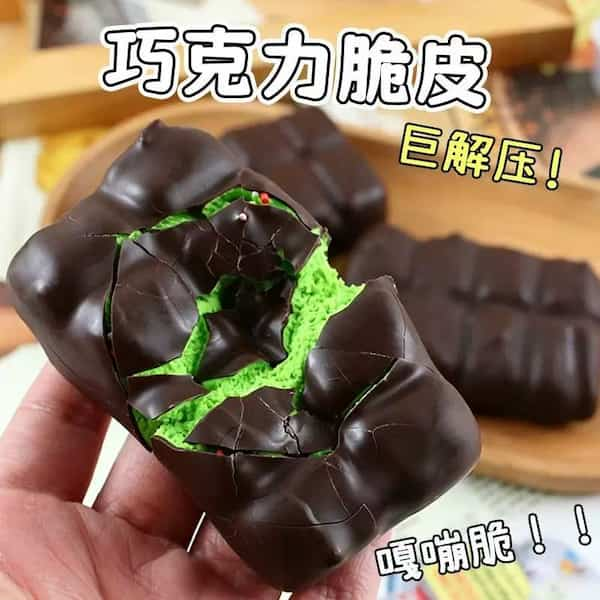
The term “crispy squishy” is commonly used in online product descriptions and social commerce to describe certain squeeze toys with a crunchy-looking, crackly, or bead-like texture. It is not a standardized technical category, so products sold under this name can differ considerably in materials, construction, and performance.

Crispy squishy toy with a textured translucent surface being squeezed by hand, alongside cute food-shaped squishy toys
Crispy squishies combine tactile textures with visually engaging product designs.

5.1 A Different Sensory Experience

Traditional slow-rising squishies are often chosen for their soft foam and gradual rebound. Crispy-style products offer a different experience through their surface texture, internal structure, or the sounds produced during handling.

This difference gives sellers another way to distinguish products within an already crowded category. However, the experience varies by design, and sellers should test actual samples rather than relying on a supplier’s product photos or description.

5.2 Why Crispy Squishies Work Well in Short Videos

Products that change shape when squeezed are easy to demonstrate on camera. A close-up can show the texture, compression, rebound, and handling experience within a few seconds.

This makes crispy squishies suitable for product demonstrations, comparison videos, unboxing content, and creator-led shopping. The key is to show what makes the specific product different instead of simply repeating that it is viral.

5.3 What Does the Latest Retail Data Say?

Faire’s September 2026 toy-trend report identified crispy squishies and jumbo squishies as emerging subtrends, with retailer searches for these styles reportedly doubling. The report also highlighted growing interest in food-shaped designs and distinctive animal shapes.

This is a useful signal for businesses researching new products, but it reflects search behavior on a particular retail platform rather than total global sales. It does not establish how much profit a new seller can earn.

Source: Faire — Top Toy Trends for Holiday 2026.

What Buyers Should Evaluate Before Sourcing Crispy Squishies

  • Texture: Does the product deliver the intended tactile experience?
  • Durability: Does the surface or outer shell remain intact after repeated squeezing?
  • Material: What material and filling does the supplier use?
  • Consistency: Do samples from different production batches feel and look similar?
  • Packaging: Can the product be protected during storage and international transportation?
  • Compliance: Can the supplier provide appropriate product testing and documentation for the destination market?

6. The Future of Squishy Toys: Which Trends Are Worth Watching?

Predicting the future of a viral product category is difficult. Consumer preferences can change quickly, and today’s popular design may become less attractive when competing sellers introduce similar products.

Instead of assuming that all squishy toys will continue to grow, businesses should look at the product characteristics and selling strategies that may help individual products remain competitive.

6.1 More Distinctive Designs and Product Collections

As basic designs become easier to find, product differentiation may become increasingly important. Unusual food shapes, recognizable animals, interesting textures, coordinated collections, and seasonal designs can give buyers a clearer reason to choose one product over another.

For retailers, a coherent collection may be more useful than a random assortment of unrelated products. It can support themed displays, gift bundles, repeat launches, and more consistent branding.

6.2 Premium Textures and Larger Products

Some shoppers may be willing to pay more for a distinctive texture, a larger format, a more detailed design, or better packaging. Faire’s 2026 retail report specifically highlighted interest in jumbo squishies alongside crispy-style products.

However, a higher selling price does not automatically mean a higher profit margin. Larger products may cost more to ship, especially when they occupy substantial space relative to their weight.

6.3 Private Label and Brand Development

Retailers may begin with existing designs to test demand and later develop a more distinctive product range. Depending on the manufacturer, this could involve custom colors, packaging, approved artwork, exclusive designs, or a coordinated collection.

Customization usually requires additional discussion about minimum order quantities, tooling, sample approvals, intellectual property, and production lead times. Buyers should confirm these details before committing to a large order.

6.4 More Attention to Product Safety and Quality

As the category grows, product safety and traceability become increasingly important. A toy that looks attractive in a video may still have weaknesses in its outer shell, seams, filling, labeling, or material composition.

For the U.S. market, the Consumer Product Safety Commission provides guidance on applicable children’s toy safety standards and certification. Importers should identify the requirements for the exact product and age group rather than assuming that a supplier’s general statement of compliance is sufficient.

Reference: U.S. Consumer Product Safety Commission — Toy Safety Business Guidance.

Long-term opportunity: The more sustainable approach is to build a product range around clear customer demand, reliable quality, and differentiation—not to rely entirely on the next viral shape.

7. Is Selling Squishy Toys a Worthwhile Business?

Squishy toys may offer opportunities for online sellers, gift shops, independent retailers, wholesalers, and brands looking to expand their product range. Their compact formats, visual appeal, and variety of designs can make them attractive products to test.

But whether they are a worthwhile business depends on the target market, sourcing price, selling channel, competition, compliance costs, and inventory strategy.

Business Model Potential Advantage Main Challenge
Online marketplace seller Can test different designs and respond to emerging demand. Competition, platform fees, advertising costs, and changing trends.
Social commerce seller Product demonstrations can communicate texture and appearance quickly. Content production, unpredictable reach, and trend volatility.
Gift shop or independent retailer Small products can fit impulse-purchase displays and gift collections. Limited shelf space and the need to refresh product selection.
Wholesaler or distributor Can supply multiple retail customers and offer a wider product assortment. Working capital, storage, bulk-order risk, and consistent supply.
Private-label brand More control over branding, packaging, and product positioning. Higher development effort, possible MOQs, and greater upfront commitment.

7.1 The Biggest Opportunity: Testing Demand Before Scaling

New sellers do not necessarily need to begin with a large order or a fully customized product. Where supplier terms and regulations permit, a small test assortment can help establish which shapes, textures, price points, and product presentations attract actual buyers.

A practical test may include several designs, product samples, competitor research, and a limited initial order. The seller can then compare actual sales, customer feedback, return rates, and total costs before deciding whether to reorder.

7.2 Understand the Full Cost Before Calculating Profit

A product’s factory price is only one part of its cost. A seller importing squishy toys from China should account for packaging, inspection, freight, duties and taxes where applicable, warehousing, marketplace fees, advertising, returns, and damaged or unsellable units.

A product that appears inexpensive at the factory may become less attractive once these expenses are included. This is especially important for bulky products, fragile outer shells, or products with strict testing and labeling requirements.

A Simple Profitability Check

Estimated Contribution per Unit = Selling Price − Total Variable Cost per Unit

Total variable cost should include all relevant per-unit costs, not only the supplier’s quotation. Fixed expenses such as design development, photography, and initial setup should also be considered when estimating how long it will take to recover the investment.

Run conservative, expected, and optimistic scenarios. Do not base your decision on a best-case sales forecast alone.

7.3 Is It Too Late to Enter the Market?

There is no universal answer. A growing category may still contain opportunities, but a seller entering after a product has gone viral may face more competition and less room for error.

Before investing, investigate your intended country, sales channel, target customer, competitor pricing, product reviews, and supplier options. Look for evidence of actual purchase demand rather than relying only on views, likes, or trend headlines.

A sensible goal is not simply to sell the most popular squishy toy today. It is to find products that customers will buy at a price that covers your costs and leaves a reasonable return.

8. How to Source Squishy Toys From China

China can be a sourcing option for businesses looking for squishy toys, including food-shaped designs, slow-rising foam products, textured squeeze toys, and customized collections. However, choosing the right supplier requires more than comparing product photos and factory prices.

Buyers should evaluate product quality, minimum order quantities, customization options, production capacity, compliance documentation, and the total landed cost before placing an order.

8.1 Where Can You Find Squishy Toy Suppliers?

Sourcing Channel Best For What to Check
Alibaba International buyers comparing manufacturers, trading companies, and export-ready suppliers. Supplier identity, product specifications, MOQ, trade terms, and verification records.
1688 Buyers exploring China’s domestic wholesale market and a wider range of product listings. Communication, domestic-market terms, supplier capabilities, export arrangements, and quality consistency.
Direct factory sourcing Buyers seeking customized products, private label, or longer-term manufacturing relationships. Actual production capabilities, sample quality, tooling costs, capacity, and ownership of designs.
China sourcing agent Buyers who need help finding suppliers, comparing quotations, coordinating inspections, or consolidating orders. Service scope, fee structure, supplier transparency, inspection arrangements, and communication process.

Each channel serves a different purpose. A marketplace can help you discover potential products, while direct factory sourcing may be useful for customized designs. A sourcing agent can help coordinate multiple steps when you need local support.

You can also explore HolaSourcing’s Product Sourcing Service to learn how product research and supplier coordination can fit into your purchasing process.

8.2 How to Evaluate a Squishy Toy Supplier

Before choosing a supplier, ask for detailed product information and evaluate whether the supplier can consistently deliver the product you intend to sell.

Supplier Evaluation Checklist

  • Business identity: Confirm the supplier’s registered business information and whether it is a manufacturer or trading company.
  • Product specifications: Request details about the material, filling, dimensions, weight, colors, and packaging.
  • MOQ and pricing: Compare minimum quantities, sample charges, customization fees, and price breaks.
  • Sample quality: Test softness, texture, rebound, odor, surface finish, and durability.
  • Production capacity: Ask about normal lead times, peak-season capacity, and repeat-order consistency.
  • Compliance documents: Request applicable test reports and certificates for the destination market and intended age group.
  • Quality control: Agree on inspection criteria, acceptable defects, and how problems will be handled.
  • Payment and delivery terms: Confirm the order terms, delivery responsibilities, and what happens if production is delayed or defective.

8.3 Why Product Samples Matter

Product photos can hide differences in material quality, texture, color, and construction. For crispy squishies, buyers should pay particular attention to the outer surface, seams, internal structure, and whether the product performs consistently during repeated handling.

Request samples of the exact model you intend to order. If you plan to customize the design or packaging, confirm that the approved sample matches the final production specifications.

Record the sample’s measurable requirements, including dimensions, weight, color references, packaging, and agreed quality standards. These details can help reduce misunderstandings during mass production.

8.4 Check Product Safety Before Importing

Squishy toys may contain different foams, plastics, gels, liquids, coatings, fragrances, or small components. Safety requirements depend on the actual construction, intended users, product claims, and destination market.

If the product is intended for children, identify the applicable toy safety and chemical requirements before ordering. For example, U.S. importers should review relevant guidance from the Consumer Product Safety Commission, while businesses selling into the European Union should investigate the applicable toy safety and chemical rules for their products.

Do not assume that a generic certificate or a test report for a similar product proves that your specific model complies. Check the product identity, tested materials, applicable standards, and report validity.

References: U.S. CPSC Toy Safety Guidance and European Commission Toy Safety Information.

Important: Avoid selling products with unverified safety claims. If a squishy toy leaks, splits, releases its filling, or develops an unusual odor, investigate the cause and stop distribution when a potential safety issue is identified.

8.5 Calculate the Landed Cost, Not Just the Factory Price

Before committing to an order, estimate the total cost of getting the products into a condition where they can be sold. This helps you compare suppliers more accurately and avoid discovering unexpected expenses after production.

What to Include in Your Cost Estimate

  • Product purchase price
  • Custom molds, artwork, or packaging, where applicable
  • Samples and product testing
  • Inspection and quality control
  • Domestic transportation and export handling
  • International freight and insurance, where applicable
  • Import duties, taxes, and customs-related charges
  • Warehousing, fulfillment, marketplace fees, and expected returns

The exact cost categories depend on your shipping terms, destination, selling channel, and business model.

For lightweight products, shipping volume can still affect costs significantly. Compare the packed dimensions and actual shipping quotations rather than estimating freight solely from the product’s weight.

9. A Practical Strategy for Testing the Squishy Toy Market

If you are considering entering this category, a staged approach can help limit the risk of committing too much money before demand is established.

Step 1: Research Your Target Customers

Decide whether you want to sell to children and their parents, adult collectors, gift buyers, independent retailers, or wholesale customers. Research demand in the country and channel where you intend to sell.

Step 2: Shortlist a Small Number of Products

Compare different styles, such as slow-rising food squishies, crispy textures, animal designs, and giftable collections. Avoid choosing products based on viral views alone.

Step 3: Request and Test Samples

Compare material quality, texture, construction, packaging, and the supplier’s ability to provide relevant compliance documents.

Step 4: Calculate Costs and Test Demand

Estimate the full landed cost and compare it with realistic selling prices. Where supplier terms allow, use a manageable initial order to evaluate actual sales and customer feedback.

Step 5: Review Results Before Scaling

Track sales velocity, contribution per unit, returns, defects, advertising costs, and customer feedback. Reorder or expand the range only when the results support doing so.

This approach is particularly useful for small businesses that want to explore a trending product without tying up too much cash in untested inventory.

10. Frequently Asked Questions About Squishy Toys

What are squishy toys made of?

Depending on the design, squishy toys may use polyurethane foam, other flexible plastics or elastomers, gel-filled structures, or different combinations of materials. Buyers should request the exact material information for each product rather than assuming all squishies use the same material.

Why are crispy squishies so popular?

Their distinctive textures, satisfying handling experience, visual appeal, and suitability for short-form product demonstrations can make them attractive to consumers and online sellers. Recent retail trend reports have also highlighted interest in crispy-style squishies, although demand varies by market and product.

Are squishy toys a good product to sell online?

They may suit online stores and social commerce because they are visually demonstrable and available in many designs. However, profitability depends on demand, competition, landed cost, advertising, platform fees, quality, and compliance. Test the market before placing a large order.

Can I buy squishy toys wholesale from China?

Yes. Buyers can investigate Chinese wholesale marketplaces, manufacturers, trading companies, and sourcing agents. Compare MOQ, samples, specifications, production capacity, delivery terms, and applicable safety requirements before choosing a supplier.

Can I create my own squishy toy brand?

Depending on the supplier’s capabilities, you may be able to customize colors, packaging, artwork, shapes, or other product features. Confirm minimum order quantities, tooling charges, design ownership, sample approval procedures, and production lead times before proceeding.

What is the biggest risk when importing squishy toys?

Common risks include inconsistent quality, unverified safety documentation, excessive inventory, product imitation, changing consumer demand, and underestimated shipping or selling costs. Supplier verification, sample testing, clear specifications, and a cautious initial order can help manage these risks.

Should I start with crispy squishies or traditional slow-rising squishies?

There is no universally best choice. Crispy styles may offer a distinctive texture and strong demonstration potential, while slow-rising products have their own established appeal. Compare current demand, competition, quality, price, and supplier availability in your target market before choosing.

Final Thoughts: Is the Squishy Toy Business Worth Exploring?

Squishy toys illustrate how product design, sensory appeal, collecting behavior, and social media can combine to create a fast-moving consumer trend. Recent retail reports provide encouraging signs of interest in several squishy toy styles, including crispy and jumbo products.

Nevertheless, a growing trend does not guarantee that a new seller will make money. Competition can increase quickly, popular designs can change, and the real cost of importing and selling a product may be higher than its factory price suggests.

For entrepreneurs and importers, the most practical approach is to research a specific customer group, compare products and suppliers, verify safety requirements, test demand, and expand only when the numbers support it.

If you are planning to source squishy toys or other trending products from China, a structured sourcing process can help you compare suppliers, review product samples, coordinate quality checks, and understand the costs involved before committing to a larger order.

Looking for Squishy Toy Suppliers in China?

HolaSourcing helps businesses explore product sourcing opportunities in China, communicate with suppliers, coordinate quality checks, and organize purchasing and shipping arrangements.

Whether you are testing a small product range or developing a private-label collection, start by defining your product requirements, target quantity, destination market, and budget.

Learn About Our Product Sourcing Service →

Contact HolaSourcing About Your Project →

CATEGORIES
Table of contents
Table of Contents
Related News
How Should Buyers Control Purchase Order Changes After Sample Approval?
Yiwu Sourcing Agent Fees: Commission vs All-Inclusive
China Buying Agent Checklist: From Sample Approval to Shipment Release