
For many small wholesalers, the idea to import from China starts with a simple goal: find more products at better prices. The first few days often feel promising. There are thousands of suppliers, endless product photos, and quick replies from sellers who say they can make almost anything. Then the real work begins.
One supplier needs a deposit today. Another asks for a higher MOQ after quoting a lower one last week. A third sends samples that look close, but not quite the same as the picture. Cartons arrive at different times. Labels are missing. The shipping agent asks for documents, and every supplier gives them in a different format.
This is the point where many small wholesalers realize the problem is not only sourcing. The bigger problem is control.
In 2026, importing from China is still full of opportunity, but it is less forgiving than before. U.S. duty rules, parcel policy changes, retail packaging demands, and freight uncertainty all make scattered buying harder. Small wholesalers do not need to manage every factory by themselves. They need a buying process that brings suppliers, quality checks, warehousing, and shipping into one clear system.
Why Managing Many China Suppliers Becomes Expensive Fast
Small wholesalers often use several suppliers because their orders cover mixed categories. One buyer may need kitchen items, gift packaging, hardware accessories, seasonal decorations, and retail displays in the same shipment. That is normal. China’s supply chain is built for variety.
The trouble starts when every supplier works on a separate timeline. Even if each order is small, the management work becomes large. You are not only comparing unit prices. You are checking samples, chasing delivery dates, confirming carton marks, asking for photos, paying balances, and trying to arrange shipping without missing anything.
The Hidden Cost Is Not Always in the Quote
A supplier quote can look attractive, but it rarely tells the whole story. Small wholesalers should look past the product price and ask what the order will cost by the time it reaches the final warehouse.
A low quote may hide extra costs such as:
- Higher domestic delivery fees in China
- Poor cartons that need repacking
- Wrong labels or missing barcodes
- Delayed production that holds back the whole shipment
- Small parcel shipping that becomes expensive after duty changes
- Defects that cannot be fixed once goods leave China
This is especially important now. The U.S. has changed low-value import rules, and CBP states that many China-origin low-value shipments no longer receive duty-free de minimis treatment. You can read the official update on CBP’s de minimis guidance. For small wholesalers, this makes planned bulk or consolidated shipping more important than scattered parcel orders.
Different Suppliers Mean Different Standards
One supplier may pack products neatly. Another may use thin cartons. One understands retail labeling. Another only sells loose goods for local wholesale. When products come from many sources, standards become uneven unless someone checks them before export.
This matters for ordinary goods, but it matters even more for retail-ready orders. If a store buyer asks for barcode labels, display cartons, or a pdq pallet display, the supplier must understand more than product manufacturing. They must also understand how the goods will be presented, counted, shipped, and opened at the destination.
Many small wholesalers search terms like pdq meaning retail only after a buyer requests it. In retail, PDQ usually refers to packaging or displays that help products go onto shelves quickly. If that detail is handled late, the cost of fixing packaging can be much higher.
A Local Control Point Makes Importing from China More Practical
The better question is not “How can I find dozens of suppliers?” It is “How can I control dozens of suppliers without spending my whole day on messages?”
A local sourcing team in China can act as the control point between the buyer and the supplier network. That does not mean the buyer loses visibility. It means the buyer receives clearer updates, better comparisons, and fewer separate problems.
Supplier Search Should Include Offline Markets
Many small wholesalers start online because it is easy. Online sourcing has value, but it does not show every option. In places such as Yiwu, many suppliers still work through offline booths, stock markets, and local factory networks. Some have good inventory but weak online listings. Some are factory-direct. Some are second-level traders.
HolaSourcing is based in Yiwu, close to Yiwu International Trade City, so we can visit suppliers in person and compare real samples, prices, packaging, and stock. Our service is built for overseas buyers who need mixed-category sourcing but do not want to manage every supplier alone. We help buyers find suitable options, check details locally, and keep the order process easier to follow.
A local sourcing process should compare:
- Real supplier type: factory, booth, trader, or stock seller
- Product quality and material details
- MOQ and price flexibility
- Sample accuracy
- Packaging ability
- Delivery time
- Export and document support
This kind of comparison is hard to do from a spreadsheet alone.
Face-to-Face Negotiation Can Change the Result
Small wholesalers often accept the first MOQ because they think it is fixed. In many cases, it is not. A local team can speak with suppliers face to face, explain the buyer’s long-term plan, and push for better terms.
That may include:
- Lower MOQ for a trial order
- Mixed-color or mixed-style packing
- Free or lower-cost samples
- Better carton quality
- More practical payment terms
- Faster delivery for stock goods
Not every supplier will agree. Good sourcing is also knowing when to walk away. A supplier who refuses basic inspection, gives unclear answers, or changes terms too often may not be worth the lower price.

Quality Control Should Happen Before the Goods Leave China
Quality problems become much harder to solve after export. Once goods arrive overseas, replacement takes time, returns cost money, and disputes become harder to prove. Small wholesalers need quality control before final payment and before shipment.
This does not always require a complex inspection report. For many wholesale orders, practical checking is enough to prevent common losses.
Sample Approval Needs Clear Records
A sample is useful only when it becomes a standard for the bulk order. That means the approved sample should be recorded with photos, videos, measurements, color notes, logo details, and packaging instructions.
If there are many suppliers, sample control becomes even more important. Without clear records, it is easy to forget which supplier approved which version. A local warehouse can store samples, label them, and compare bulk goods against them later.
At HolaSourcing, we can help buyers check samples locally, take detailed photos and videos, and organize supplier samples before bulk production. This reduces the chance of product mismatch, especially for mixed orders.
Inspection Should Match the Product Risk
Not every order needs the same level of inspection. A simple stock item may need carton count and visual checking. A custom product may need material, size, logo, function, color, and packaging checks. A retail display order may need structure, print quality, loading quantity, and carton strength checks.
Before shipment, buyers should confirm:
- Product quantity
- SKU and color match
- Visible defects
- Logo and printing accuracy
- Inner packaging
- Master carton condition
- Carton marks and labels
- Retail or warehouse preparation requirements
This step is not about making the process slower. It is about finding problems while the supplier is still able to fix them.
Consolidation Is the Key for Small Wholesale Orders
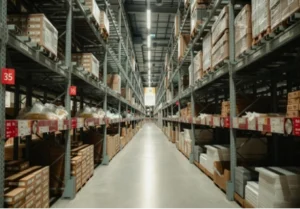
Many small wholesalers lose money because they ship too many small orders separately. Each shipment has its own handling cost, document work, and delivery risk. When suppliers deliver goods to one China warehouse first, the buyer gets a better chance to check, sort, repack, label, and ship everything together.
One Warehouse Brings Order to Mixed Purchasing
A China warehouse can receive goods from different suppliers at different times. Each delivery can be counted and matched to the purchasing list. If cartons are damaged, missing, or incorrectly marked, the issue can be found before export.
Warehouse consolidation is useful for buyers who handle:
- Mixed wholesale products
- Seasonal goods
- Trial orders from several suppliers
- Retail-ready packaging
- Online marketplace inventory
- Less-than-container-load shipping
- Orders that need labels or carton marks
Our Yiwu warehouse support allows buyers to combine goods from many suppliers, check quantities, replace weak packaging when needed, and prepare shipments more carefully. For a small wholesaler, this can feel like having a small purchasing office in China without building one from scratch.
Consolidated Shipping Helps Control Landed Cost
The real cost of importing is the landed cost, not the product quote. Landed cost includes product price, China inland delivery, inspection, packaging, warehousing, freight, duty, customs clearance, and final delivery.
When shipments are consolidated, the buyer can see costs more clearly. It also becomes easier to prepare cleaner commercial invoices and packing lists. That matters because U.S. importers must classify goods correctly and check whether additional tariffs apply. The USTR Section 301 tariff search page is one place buyers can review whether an HTS code may face additional duties.
For general tariff context, buyers can also review the WTO tariff profile for China, though final duty decisions should always be checked with a customs broker.
Import from China With a Repeatable Buying System
A small wholesaler does not need a huge team to import from China well. But they do need a repeatable system. Each order should follow a clear path from product search to delivery.
A practical workflow can look like this:
- Define product needs, target price, order quantity, and selling market.
- Search suppliers through online channels, Yiwu markets, and factory networks.
- Compare real cost, not only unit price.
- Confirm samples with photos, measurements, and written details.
- Approve packaging, labels, carton marks, and display requirements.
- Track production progress supplier by supplier.
- Inspect goods before balance payment or warehouse release.
- Consolidate goods in one China warehouse.
- Prepare invoice, packing list, and shipping plan.
- Review supplier performance after delivery.
This process sounds simple. The hard part is keeping it consistent. Once it becomes routine, importing feels less like solving a new problem every week and more like running a controlled supply chain.
China’s export market remains active. Reports on recent customs data show strong export growth in 2026, and demand from global buyers continues across many categories. For small wholesalers, that means China still offers product choice and supply depth. It also means good suppliers, good warehouse space, and good shipping schedules need better planning.
Conclusion
Small wholesalers can import from China without personally managing dozens of suppliers, but they need to stop treating sourcing as a series of separate chats. The safer path is to create one managed process inside China. Supplier search, sample control, negotiation, inspection, warehouse consolidation, packaging, and shipping should work together. This is especially important as duty rules, retail packaging needs, and freight costs change. A local sourcing partner can help turn scattered orders into a clear purchasing system. With the right workflow, small wholesalers can buy mixed products, reduce supplier confusion, protect quality, and see landed cost before the goods leave China.
FAQs
Q: How can small wholesalers import from China with less supplier stress?
A: Use one sourcing agent to manage suppliers, inspection, warehouse consolidation, and shipping.
Q: Is warehouse consolidation useful for small China orders?
A: Yes. It combines goods, reduces confusion, and helps control shipping cost.
Q: What does pdq meaning retail usually mean?
A: It refers to quick retail display packaging for easier shelf placement.